

As Trulicity vs Mounjaro: Which Is Better for Diabetes and Weight Loss? takes center stage, this opening passage beckons readers with a captivating overview of the topic, setting the stage for an insightful discussion on these medications and their impact on managing diabetes and weight loss.
Introduction to Trulicity and Mounjaro
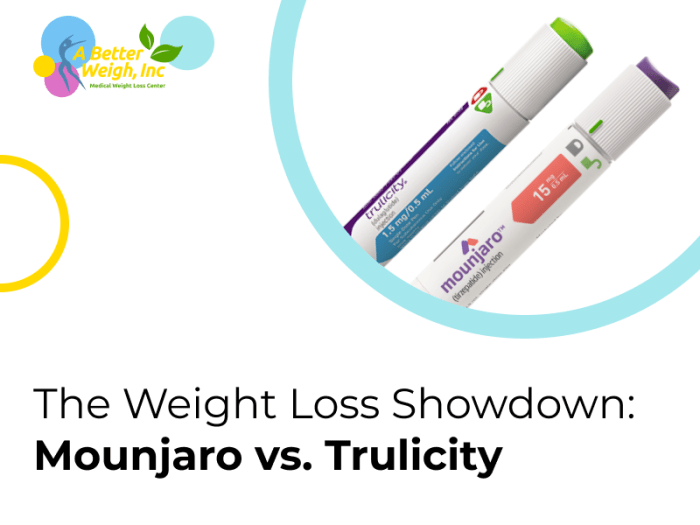
Trulicity and Mounjaro are both medications used in the management of diabetes and weight loss. While Trulicity is a brand name for dulaglutide, a glucagon-like peptide-1 (GLP-1) receptor agonist, Mounjaro is a combination medication containing metformin and sitagliptin, which belong to different classes of antidiabetic drugs.
Primary Differences Between Trulicity and Mounjaro
- Trulicity is a GLP-1 receptor agonist that works by stimulating insulin secretion and reducing glucagon production, leading to lower blood sugar levels and weight loss. On the other hand, Mounjaro combines metformin, which reduces glucose production in the liver, and sitagliptin, which increases insulin release in response to meals.
- Trulicity is administered once weekly via subcutaneous injection, while Mounjaro is typically taken twice daily as an oral medication.
- Trulicity is indicated for both type 2 diabetes and weight management, while Mounjaro is primarily used for type 2 diabetes treatment.
Mechanisms of Action for Trulicity and Mounjaro
- Trulicity (dulaglutide) activates GLP-1 receptors in the pancreas, leading to increased insulin secretion and decreased glucagon production. This results in lower blood sugar levels and reduced appetite, contributing to weight loss.
- Mounjaro combines metformin, which improves insulin sensitivity and reduces glucose production in the liver, with sitagliptin, which increases insulin release from pancreatic beta cells. This dual mechanism helps in lowering blood sugar levels and managing diabetes.
Efficacy Comparison

Trulicity and Mounjaro are both medications used in managing diabetes, but how do they compare in terms of efficacy and impact on weight loss?
Effectiveness in Managing Diabetes
Trulicity, a GLP-1 receptor agonist, has been shown to effectively lower blood sugar levels in individuals with type 2 diabetes. Clinical studies have demonstrated its ability to reduce HbA1c levels and improve overall glycemic control. On the other hand, Mounjaro, a newer medication in the market, also targets blood sugar levels and has shown promising results in managing diabetes.
However, more long-term studies are needed to fully understand its efficacy compared to Trulicity.
Weight Loss Results
Trulicity has been associated with modest weight loss in individuals with type 2 diabetes. Studies have shown that patients using Trulicity experienced weight reduction, which can be beneficial for those struggling with obesity or overweight issues. In contrast, there is limited data available on the weight loss effects of Mounjaro.
Further research is essential to determine the impact of Mounjaro on weight management.
Impact on Blood Sugar Levels
Clinical trials have demonstrated that Trulicity effectively reduces fasting plasma glucose levels in diabetic patients. The medication works by stimulating insulin secretion and inhibiting glucagon release, leading to improved glucose utilization in the body. Similarly, Mounjaro has shown promising results in lowering blood sugar levels, but more research is needed to compare its efficacy with Trulicity in managing hyperglycemia.
Side Effects and Safety Profile
Trulicity and Mounjaro, like any medication, can have side effects that vary in severity. Understanding these side effects is crucial for patients considering these treatments for diabetes and weight loss.
Common Side Effects
- Trulicity:
- Nausea
- Vomiting
- Diarrhea
- Abdominal pain
- Mounjaro:
- Headache
- Dizziness
- Fatigue
- Constipation
Severe Adverse Reactions
- Trulicity:
- Risk of thyroid C-cell tumors
- Pancreatitis
- Hypoglycemia
- Mounjaro:
- Severe allergic reactions
- Acute kidney injury
- Severe liver problems
Differences in Safety Profiles
Trulicity and Mounjaro have distinct safety profiles due to their different mechanisms of action and active ingredients. Trulicity has been associated with gastrointestinal side effects like nausea and diarrhea, while Mounjaro may present risks of severe allergic reactions and organ damage.
Patients should consult their healthcare provider to understand the potential risks and benefits of each medication based on their individual health conditions and medical history.
Dosage and Administration
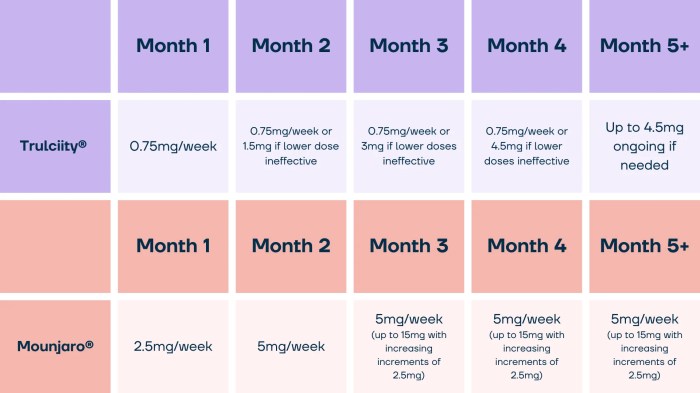
When it comes to managing diabetes and weight loss, understanding the recommended dosage regimens and methods of administration for Trulicity and Mounjaro is crucial for patients to achieve optimal results.
Trulicity
- Trulicity is typically administered once a week on the same day each week.
- The recommended starting dose is 0.75 mg once weekly, which can be increased to 1.5 mg once weekly for additional glycemic control.
- It is injected subcutaneously into the abdomen, thigh, or upper arm.
Mounjaro
- Mounjaro is usually taken orally, once daily with or without food.
- The initial dose is 10 mg once daily, which can be adjusted based on individual response and tolerability.
- It is available in tablet form for easy administration.
Both Trulicity and Mounjaro offer convenient dosing schedules for patients, with Trulicity requiring weekly injections and Mounjaro being a once-daily oral medication. Patients can choose the option that best fits their lifestyle and preferences, making it easier to adhere to their treatment plan for better management of diabetes and weight loss.
Epilogue
In conclusion, the comparison between Trulicity and Mounjaro sheds light on the nuances of their efficacy, safety profiles, and dosing regimens, offering valuable insights for individuals seeking the most suitable treatment for diabetes and weight loss.
Essential Questionnaire
How do Trulicity and Mounjaro differ in terms of mechanisms of action?
Trulicity works by mimicking the hormone GLP-1, while Mounjaro targets multiple pathways to manage blood sugar levels and promote weight loss.
What are the common side effects associated with Trulicity and Mounjaro?
Common side effects may include nausea, diarrhea, or injection site reactions for Trulicity, while Mounjaro may cause gastrointestinal issues and headaches.
Are there any significant differences in the safety profiles of Trulicity and Mounjaro?
Trulicity has a lower risk of hypoglycemia compared to Mounjaro, but both medications have their own safety considerations that should be discussed with a healthcare provider.
What is the recommended dosage regimen for Trulicity and Mounjaro?
Trulicity is typically administered once a week, while Mounjaro may require more frequent dosing depending on individual needs and response to treatment.

