


Delving into Psychiatry vs Psychology: Understanding the Key Differences, this introduction immerses readers in a unique and compelling narrative, with a casual formal language style that is both engaging and thought-provoking from the very first sentence.
As we explore the distinctions between psychiatry and psychology, we uncover the nuances in their approaches to mental health and treatment, shedding light on the diverse paths these professionals take in helping individuals navigate their psychological well-being.
Understanding Psychiatry and Psychology

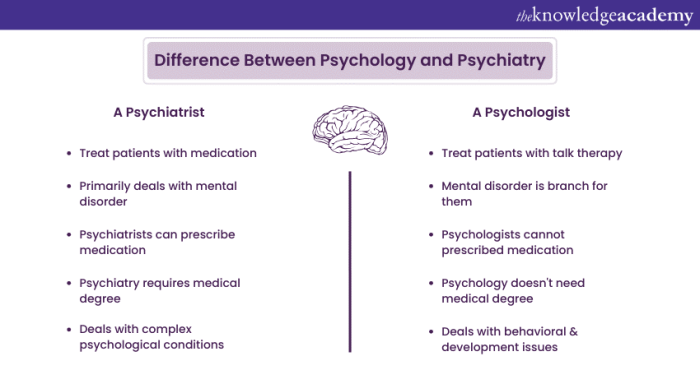
Psychiatry and psychology are both disciplines that focus on mental health, but they differ in their approach and methods of treatment. Psychiatry is a branch of medicine that deals with the diagnosis, treatment, and prevention of mental illnesses. Psychiatrists are medical doctors who can prescribe medication and utilize a medical model to understand mental health conditions.
On the other hand, psychology is a field that studies the mind and behavior. Psychologists use talk therapy and behavioral interventions to help individuals overcome psychological issues.
Key Differences in Focus
- Psychiatry focuses on the biological aspects of mental health, such as brain chemistry and genetics, while psychology emphasizes the role of thoughts, emotions, and behavior.
- Psychiatrists often treat mental illnesses with medication, while psychologists primarily use therapy and counseling techniques.
- Psychiatrists are trained medical doctors who can conduct physical exams and order laboratory tests, whereas psychologists do not have medical training and cannot prescribe medication.
Approach to Mental Health
- For example, if a person is experiencing symptoms of depression, a psychiatrist may prescribe antidepressant medication to address the chemical imbalances in the brain. Meanwhile, a psychologist may use cognitive-behavioral therapy to help the individual change negative thought patterns and behaviors associated with depression.
- In cases of severe mental illness like schizophrenia, a psychiatrist may recommend a combination of medication and therapy, while a psychologist may focus on long-term psychotherapy to help the individual manage symptoms and improve their quality of life.
Education and Training
Becoming a psychiatrist and a psychologist requires different academic paths and training programs. Let's delve into the details.
Academic Paths
- Psychiatrist: To become a psychiatrist, one must first complete a bachelor's degree, followed by medical school to earn an MD or DO degree. After medical school, aspiring psychiatrists undergo a four-year psychiatric residency program.
- Psychologist: Psychologists typically complete a bachelor's degree in psychology or a related field, followed by a graduate program in psychology (usually a master's or doctoral degree). Specializations can include clinical, counseling, or research psychology.
Residency Training vs. Internship and Supervised Practice
- Psychiatrist: Psychiatrists undergo a residency training program after completing medical school. This involves hands-on clinical experience in various psychiatric settings under the supervision of experienced psychiatrists.
- Psychologist: Psychologists often participate in internships and supervised practice as part of their graduate training. This allows them to gain practical experience in their chosen specialization, such as clinical psychology.
Importance of Specialization
Specialization within psychiatry and psychology is crucial for providing effective care to patients. Psychiatrists may choose to specialize in areas such as addiction psychiatry, child and adolescent psychiatry, or forensic psychiatry. Psychologists can specialize in clinical psychology, counseling psychology, neuropsychology, or other areas based on their interests and expertise.
Specialization allows professionals to focus on specific populations or mental health issues, providing specialized treatment and support.
Treatment Approaches
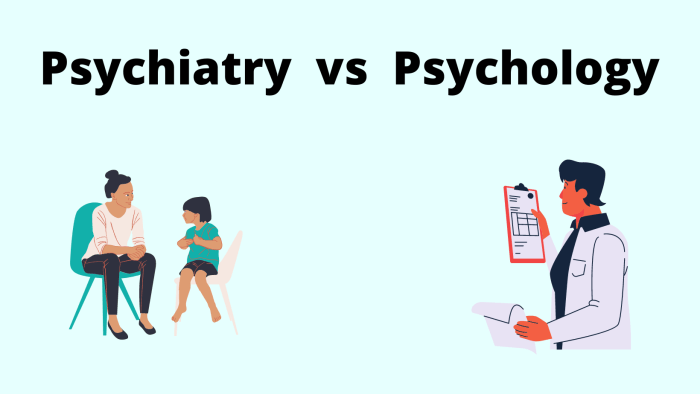
When it comes to treating mental health conditions, psychiatrists and psychologists utilize different approaches based on their training and expertise. Psychiatrists primarily focus on medication management, while psychologists often employ therapeutic interventions like cognitive-behavioral therapy to help patients.
Psychiatry: Medication Management
- Psychiatrists are medical doctors who can prescribe medications to treat mental health disorders such as depression, anxiety, bipolar disorder, and schizophrenia.
- Medication management involves assessing a patient's symptoms, determining the appropriate medication, monitoring its effectiveness, and adjusting dosages as needed.
- Examples of psychiatric medications include antidepressants, antipsychotics, mood stabilizers, and anti-anxiety drugs.
Psychology: Cognitive-Behavioral Therapy
- Psychologists use therapeutic interventions like cognitive-behavioral therapy (CBT) to help patients identify and change negative thought patterns and behaviors contributing to their mental health issues.
- CBT is effective in treating conditions such as phobias, panic disorder, obsessive-compulsive disorder, and post-traumatic stress disorder.
- Through CBT, patients learn coping strategies, problem-solving skills, and relaxation techniques to manage their symptoms and improve their quality of life.
Patient Cases
- A patient experiencing severe symptoms of schizophrenia, such as hallucinations and delusions, may benefit more from psychiatry due to the need for medication management to stabilize their condition.
- On the other hand, a patient struggling with anxiety and panic attacks may find relief through psychology, specifically CBT, to address the underlying causes of their symptoms and develop effective coping mechanisms.
- It is essential for healthcare providers to assess each patient's unique needs and tailor the treatment approach accordingly to ensure the best possible outcomes.
Collaboration and Interdisciplinary Work
In a healthcare setting, psychiatrists and psychologists often collaborate to provide comprehensive care for patients with mental health conditions. This collaboration combines the medical expertise of psychiatrists with the psychological knowledge of psychologists to address the multifaceted needs of individuals struggling with mental health issues.
Role of Interdisciplinary Teams
Interdisciplinary teams play a crucial role in treating complex mental health conditions by bringing together professionals from various disciplines, such as psychiatry, psychology, social work, and counseling. These teams work collaboratively to develop personalized treatment plans that consider the biological, psychological, and social aspects of a patient's condition.
By incorporating diverse perspectives and expertise, interdisciplinary teams can offer holistic care that addresses the entirety of a patient's needs.
- Psychiatrists: Focus on diagnosing and treating mental health disorders using a medical model that includes medication management and psychotherapy.
- Psychologists: Specialize in providing therapy and counseling services to help patients overcome psychological challenges and improve their mental well-being.
- Social Workers: Assist patients in connecting with community resources, navigating social support systems, and addressing environmental factors that may impact their mental health.
- Counselors: Offer emotional support, guidance, and therapeutic interventions to help individuals cope with stress, trauma, and interpersonal issues.
Case Study: Psychiatry and Psychology Collaboration
In a case involving a patient with severe depression and anxiety, a psychiatrist and psychologist may work together to provide comprehensive care. The psychiatrist may prescribe medication to manage the patient's symptoms, while the psychologist conducts therapy sessions to address underlying psychological issues contributing to the mental health condition.
Through this collaborative approach, the patient receives a combination of medical and psychological interventions that target both the biological and emotional aspects of their illness, leading to improved outcomes and overall well-being.
Epilogue
In conclusion, the comparison between psychiatry and psychology reveals the intricate tapestry of mental health care, showcasing the collaboration and specialization that define these fields. By understanding these key differences, we gain a deeper appreciation for the diverse strategies employed in addressing mental health concerns.
Common Queries
What is the main difference between psychiatry and psychology?
Psychiatry deals with the medical treatment of mental disorders, often involving medication, while psychology focuses on therapy and counseling.
How long does it take to become a psychiatrist versus a psychologist?
Becoming a psychiatrist requires completing medical school and a psychiatry residency, typically taking around 12 years. On the other hand, becoming a psychologist involves obtaining a doctoral degree in psychology, which takes about 5-7 years.
Can a patient benefit more from psychiatry or psychology?
It depends on the individual's needs. Patients requiring medication management for severe mental illnesses may benefit more from psychiatry, while those seeking therapy and counseling might find psychology more beneficial.